What Are Future-Facing Technologies In Mining?
The mining industry is standing at the edge of a new era. Rapid advances in automation, artificial intelligence and connectivity are changing how mines are designed, operated and maintained. What once relied on manual processes is now guided by data, sensors and machine learning, giving rise to a level of precision and safety that was once unimaginable.
Future mining technology is not only redefining productivity, but also how companies meet sustainability and workforce expectations. Across Australia’s resource sector, autonomous mining technology is creating more efficient and resilient operations that can adapt to shifting market demands.
In this article, we explore the future-facing technologies shaping the next generation of mine sites.
Latest mining technology shaping tomorrow’s mines
Below are the key technologies driving safer, smarter and more sustainable operations across the industry.
- Artificial intelligence and autonomous systems
Artificial intelligence (AI) has become the backbone of the latest mining technology. Modern mines use AI to process massive volumes of real-time data, turning information from equipment sensors and site networks into practical insights. These systems can predict maintenance needs, optimise fleet routes and balance energy consumption.
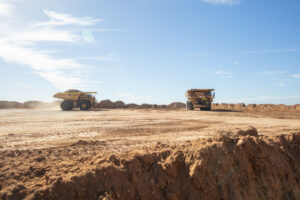
Autonomous haulage and drilling systems represent a major leap forward. Trucks and excavators fitted with advanced navigation and control software operate safely with minimal human input.
Operators can monitor progress remotely, making decisions based on live performance data rather than assumptions. This approach lowers downtime, improves fuel efficiency and enhances overall safety on site. The result is a more productive mining environment that relies on intelligent systems rather than manual coordination.
- Data connectivity and digital integration
The latest technology in the mining industry depends on uninterrupted data flow. From IoT sensors to cloud-based control systems, connected mining environments make it possible to manage every stage of production from a single source of truth. Real-time dashboards track vehicle movement, material flow and environmental conditions, allowing teams to react instantly when conditions change.
Digital integration also enables better collaboration between equipment, operators and management.
Connected platforms combine data from multiple systems, giving decision-makers a clearer picture of operational efficiency. Predictive analytics tools can detect irregularities early, preventing costly interruptions and keeping fleets performing at their best.
- Electrification and sustainable operations
Electrification is fast becoming a cornerstone of future mining technology. As environmental regulations tighten and companies aim for net-zero targets, electric and hybrid fleets are replacing traditional diesel-powered machinery. Battery-driven trucks and loaders offer quieter operation, lower heat emissions and fewer moving parts, which translates into lower maintenance costs and reduced downtime.
Renewable energy integration is another step toward sustainability. Many modern mine sites now use solar or wind power combined with energy-storage systems to run equipment and facilities. Data-driven monitoring platforms help track consumption, optimise power distribution and reduce waste.
These innovations are proving that sustainability and profitability can move hand in hand in Australia’s competitive mining landscape.
- Advanced safety and remote operations
Safety remains the driving force behind every advancement in the latest mining technology. Wearable sensors, location trackers and automated monitoring systems are helping reduce accidents by identifying risks before they occur. Collision avoidance systems use radar and machine vision to keep vehicles at safe distances and prevent equipment interference.
Remote operations centres take this a step further by removing personnel from high-risk zones altogether. Through high-speed communication networks, operators can now control machinery hundreds of kilometres away. This setup not only protects workers but also opens opportunities for a more diverse workforce, allowing skilled professionals to operate and supervise without being physically present at remote sites.
- Robotics and next-generation machinery
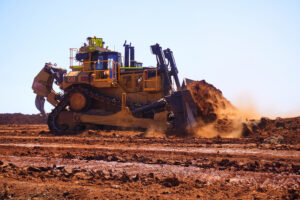
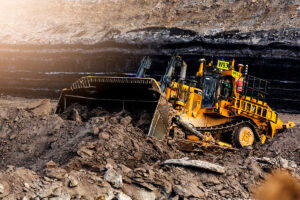
Modern robotics are reshaping how mining tasks are carried out. From autonomous dozers to robotic drills, machines now handle repetitive or hazardous jobs with unmatched consistency. Sensors and machine learning help equipment respond dynamically to terrain, load and environmental changes, maintaining precision in every cycle.
The semi-autonomous systems now used across major mining projects combine human expertise with robotic accuracy. Operators oversee several units simultaneously, intervening only when necessary. This balanced approach supports safer conditions, higher output and improved asset longevity.
As robotics evolve, their integration into large-scale mining fleets will continue to expand, creating smarter, more adaptable operations.
Powering the next era of mining with National Group
Across Australia’s mining sector, innovation is more than a trend. It is an operational necessity. National Group is leading this transformation with advanced equipment and automated mining technology that delivers measurable results in safety, performance and scalability.
Through Wolff Mining, a member of the National Group, the company has set new benchmarks with its award-winning Semi-Autonomous Tractor System (SATS) technology. This world-first application has redefined large-scale satellite bulk dozer push and semi-autonomous blast hole drilling, helping clients achieve consistent production across demanding projects in Queensland and New South Wales.
Discover how National Group’s automated mining solutions can help your operation unlock the next level of performance, safety and sustainability. Connect with us today.